



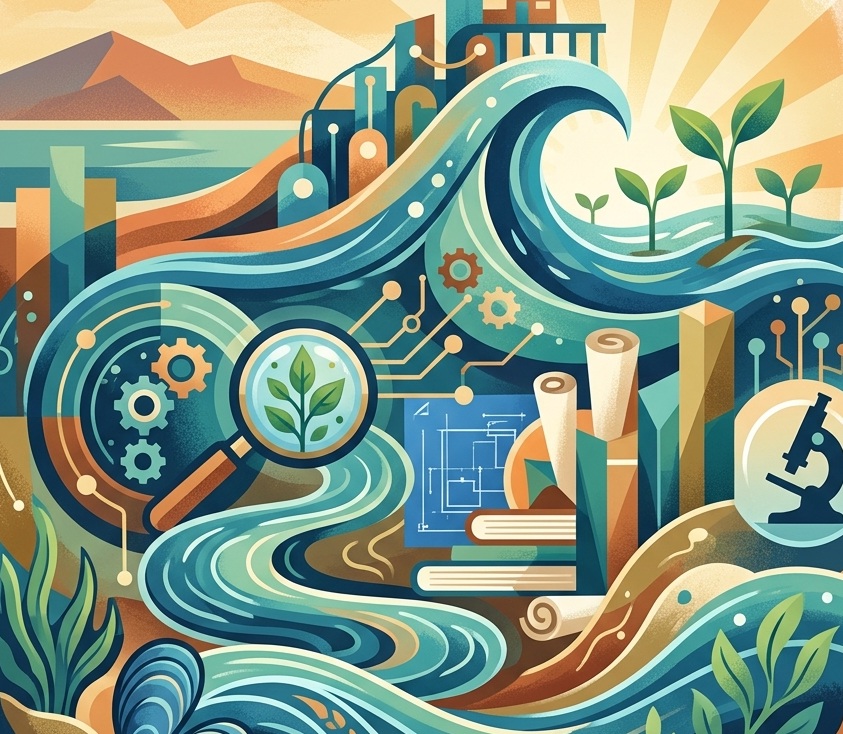
When people talk about aquaculture, they often talk about food.
That makes sense. Aquaculture produces seafood, and California has a real opportunity to strengthen local and domestic aquatic food production.
But the opportunity is bigger than seafood alone.California aquaculture touches workforce development, coastal economies, rural
communities, public education, research, restoration, climate resilience, technology, specialty crops, culinary identity, and future careers connected to water.
That is what makes this sector so important.
For students, aquaculture offers career pathways in animal care, biology, marine science, agriculture, water quality, hatchery work, operations, engineering, food safety, seafood sales, logistics, processing, environmental monitoring, equipment, business development, and entrepreneurship.
For communities, aquaculture can support jobs, local food systems, working waterfronts, small businesses, and regional identity.
For agriculture, it broadens the definition of what California grows.
For restaurants and consumers, it offers the chance to connect more directly with local and regional aquatic products.
For researchers and educators, it creates living laboratories for water, food, sustainability, restoration, and systems thinking.
For policymakers, it offers a sector that sits at the intersection of food security, environmental stewardship, economic development, and workforce readiness.
This is why California aquaculture should not be framed only as a niche industry.
It is part of a much larger conversation about how we feed people, train people, employ people, restore ecosystems, use water wisely, and build resilient regional economies.
The opportunity is not automatic. It will require visibility, collaboration, investment, thoughtful policy, education, and public trust.
But the foundation is here.
California already has producers, scientists, educators, associations, agencies, entrepreneurs, and working farms doing the work.
Now the opportunity is to connect those pieces into something stronger.More students need to know this industry exists.
More members need to share what they are building.
More partners need to see where they fit.
More communities need to understand the value.
More buyers need to recognize California-grown aquatic products.
More leaders need to help move the sector forward.
Aquaculture is not just about growing in water.
It is about growing California’s next wave of food, jobs, science, and opportunity.
Recent Comments