



California’s transition to a fully carbon-free electric grid by 2045 has hit a major roadblock with the rollback of key federal clean energy tax incentives under a new budget law signed by President Donald Trump. The sweeping policy changes shorten timelines for wind and solar developers to access tax credits and impose new restrictions on components sourced from China and other “foreign entities of concern.”
The state had been relying on robust federal support to scale up renewable energy infrastructure as it simultaneously moves to electrify vehicles, buildings, and industry. Now, the changes threaten to delay or derail at least a dozen major clean energy projects already in development, including 11 solar installations and one wind project across the Central Valley, Inland Empire, and Northern California.
Accelerated Timelines and New Restrictions
Under the new federal law, most wind and solar projects must begin construction or come online by the end of 2027 to qualify for tax credits — five years earlier than previously scheduled under President Biden’s Inflation Reduction Act. Also disqualified are projects using major components from China or similar countries of concern, potentially undercutting the cost competitiveness of California’s solar supply chain.
According to Atlas Public Policy, the new rules could jeopardize up to 35,700 solar jobs and 25 manufacturing facilities in California. “The reality is, with or without clean energy tax credits, California’s energy demand is growing at a historic rate,” said Sean Gallagher, SVP of policy for the Solar Energy Industries Association. “Solar and storage remain the fastest and most affordable way to meet that demand.”
State Projects and Jobs at Risk
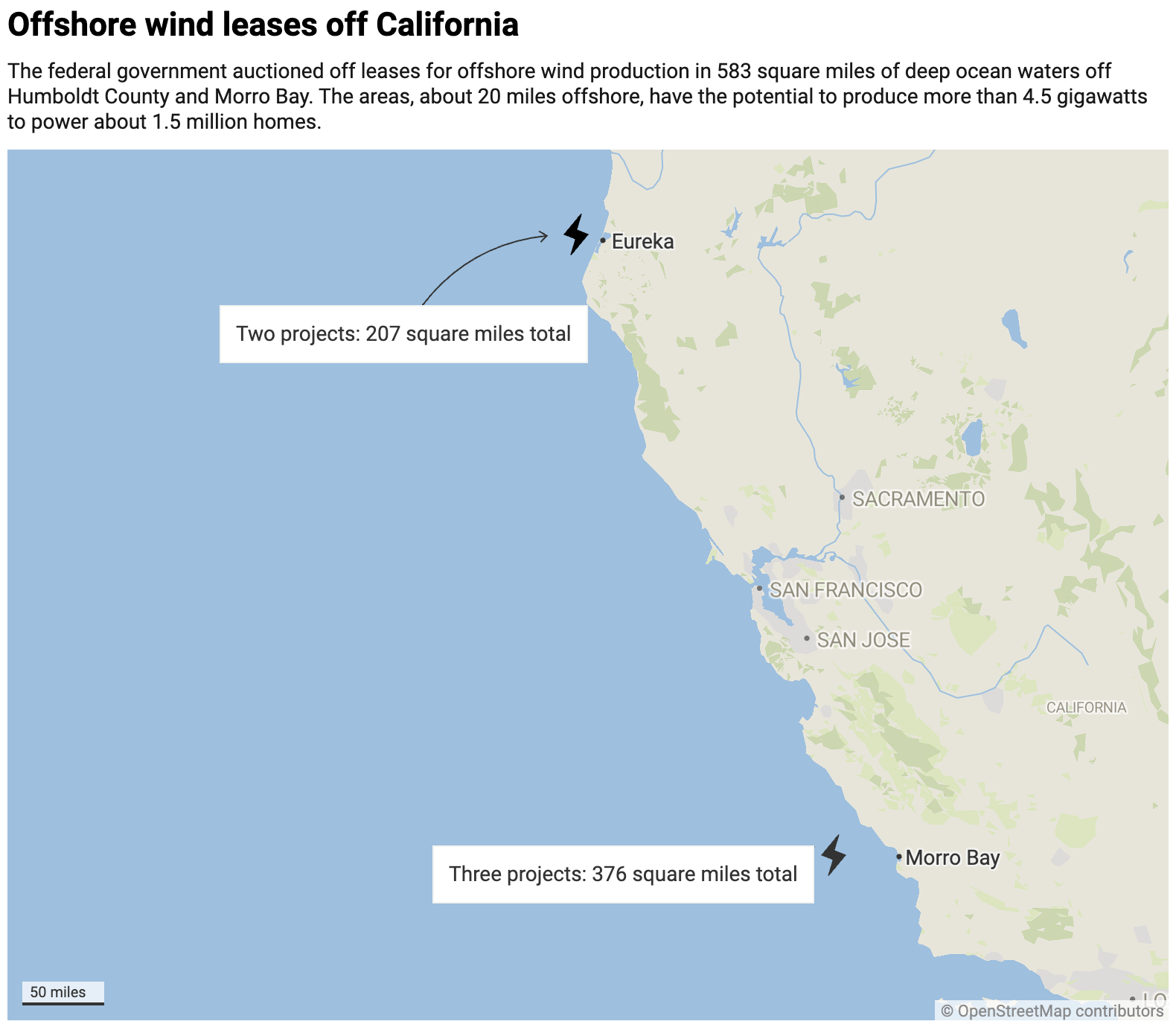
Among the most impacted are large-scale solar projects and floating offshore wind developments off the Humboldt and Morro Bay coasts — initiatives that were seen as pivotal to meeting the state’s long-term energy targets. While offshore wind is a long-lead effort not expected to deliver electricity for several years, developers may now hesitate to invest under an unstable federal policy environment.
“The whole point of California’s climate policy is to lead by example,” said Severin Borenstein, an economist at UC Berkeley. “But if clean energy becomes more expensive, fewer states and countries are likely to follow.”
The California Energy Commission estimates that ending clean energy tax credits will increase long-term electricity rates, as project savings are often passed directly to consumers.
Political and Economic Fallout
Energy Commissioner Nancy Skinner called the move a national “job killer,” warning that repealing credits for electric vehicles, rooftop solar, heat pumps, and home energy upgrades undermines both the economy and public health. “We’re not backing away from our goals,” she said. “This is about cleaning the air and addressing the climate crisis.”
The changes, expected to save the federal government nearly $499 billion from 2025 to 2034, have already created uncertainty in markets. While wind, solar, geothermal, and storage still have a narrow path to qualify for credits — if they begin construction soon — developers are racing the clock. “It may actually accelerate near-term investment,” said David Victor, professor of public policy at UC San Diego, “but the long-term cost outlook is politically fraught.”
Industry Pushes for State Action
Clean energy leaders are now urging California lawmakers to step in. Proposals include:
- Using cap-and-trade funds to reduce ratepayer costs.
- Streamlining permitting and environmental reviews for projects.
- Lowering conversion costs for turning farmland into solar sites.
- Expanding regional energy markets to trade power more efficiently.
Sen. Scott Wiener and others are advocating for reforms to California’s Environmental Quality Act (CEQA), which has long been blamed for project delays. “We’ve made strong investments in clean energy,” said Wiener. “Now we need to make it easier and faster to deploy.”
Future Outlook
Despite the challenges, California has continued to mark renewable energy milestones. In 2025 so far, nine out of ten days have included hours when the grid ran entirely on non-fossil fuel sources, according to the California Energy Commission.
Still, Gov. Gavin Newsom and clean energy advocates warn that federal setbacks could slow the state’s momentum. “Trump and Republicans can try all they want to take us back to the days of dirty coal,” Newsom said. “But the future is cheap, abundant clean energy.”
With time-sensitive projects, rising costs, and political headwinds, California’s energy industry now faces its most complex challenge yet: maintaining leadership in the clean energy transition without the federal support it had counted on.
Recent Comments